Oppo Combines OnePlus and Realme Brands
OnePlus and Realme Reportedly Merge Operations
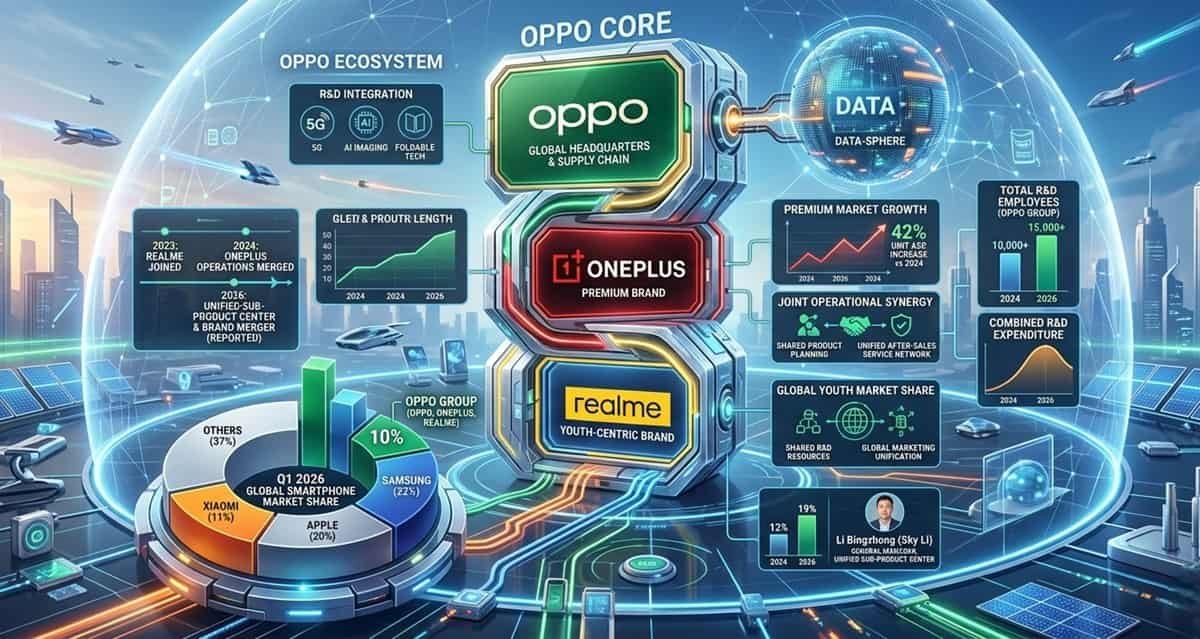
Reports suggest that OnePlus and Realme have officially merged their operations. According to tipster Digital Chat Station, both brands will combine their global and domestic divisions. Specifically, they will operate under a newly created “sub-product center.”
Moreover, this restructuring aims to streamline operations and improve efficiency. As a result, both brands may align their product strategies more closely. In addition, the move could reduce duplication in development and marketing efforts.
The tipster also claims that Li Jie will lead this new product center. Furthermore, he will report directly to Pete Lau, also known as Liu Zuohu. This leadership structure signals tighter control and unified decision-making.
Meanwhile, the report adds that both companies will merge their marketing and customer service divisions. Consequently, users may experience more consistent branding and support across regions. However, the news has also raised concerns that OnePlus may shut down in key markets such as India and Europe.
Oppo Strengthens Its Brand Ecosystem
To understand this development, it is important to look at the broader corporate structure. Both OnePlus and Realme operate under the umbrella of BBK Electronics. Over time, the group has strategically positioned its brands to target different segments.
OnePlus started as a performance-focused flagship brand, while Realme targeted budget and mid-range consumers. However, their product lines have increasingly overlapped in recent years. Therefore, consolidation now appears logical.
Additionally, both brands maintain close ties with Oppo. In fact, OnePlus already functions as a sub-brand within Oppo’s ecosystem. Similarly, Realme recently rejoined Oppo’s operational structure after years of independence.
As a result, the merger aligns with Oppo’s long-term strategy. It aims to integrate resources and strengthen its global presence. As competition intensifies, such consolidation can improve efficiency and innovation.
OnePlus: From Startup to Global Brand
OnePlus began its journey on December 16, 2013. Pete Lau and Carl Pei founded the company with a clear vision. They wanted to create premium smartphones at competitive prices.
Soon after, the company launched its first device, the OnePlus One, in April 2014. The phone quickly gained popularity due to its strong performance and value.
Later that year, OnePlus entered the Indian market in December 2014. Since then, India has remained one of its most important markets. Over time, the brand expanded its portfolio to include flagship, mid-range, and even budget devices.
However, OnePlus gradually deepened its integration with Oppo. For example, both companies began sharing research, software, and hardware resources. Therefore, the current merger appears as a continuation of this trend rather than a sudden change.
Realme’s Journey Back to Oppo
On the other hand, Realme followed a different path. The company launched as an independent brand on May 4, 2018. Initially, it focused on young consumers and aggressive pricing strategies.
As a result, Realme quickly gained traction in markets like India and Southeast Asia. Its rapid growth helped it compete with established players. However, after nearly eight years, the brand returned to Oppo’s fold earlier this year.
This reintegration marked a significant shift in strategy. Instead of operating independently, Realme now collaborates more closely with Oppo. Consequently, the merger with OnePlus further strengthens this unified approach.
Strategic Benefits of the Integration
According to a report by Leifeng.com, this integration offers several advantages. First, Oppo can allocate its resources more efficiently. Second, the company can avoid internal competition between its sub-brands.
Moreover, the report highlights improved strategic synergy. With OnePlus and Realme working together, Oppo can create a clearer brand hierarchy. For instance, each brand can focus on specific market segments without overlap.
The report also notes strong performance indicators. In 2025, both Oppo and Realme increased their market share significantly. Furthermore, they achieved top-tier growth rates in both domestic and international markets.
Therefore, the merger may accelerate this momentum. By combining strengths, the brands can compete more effectively against global rivals.
Rising Concerns About OnePlus in India
Despite these potential benefits, the news has raised concerns. In particular, many users worry about OnePlus’s future in India. These fears intensified after Robin Liu resigned in March.
Following his departure, the company issued an official statement. It thanked Liu for his contributions and wished him success in future endeavors. At the same time, it assured users that operations in India would continue without disruption.
However, speculation did not stop there. Reports suggested that Liu had been asked to report to Sky Li. Notably, Sky Li recently gained a broader leadership role within Oppo’s sub-brand structure.
Previously, Liu and Li managed their respective brands independently. Now, this hierarchy has changed significantly. Consequently, many observers interpret this as a sign of deeper consolidation.
What This Means for the Future
Overall, the reported merger signals a major shift in strategy. Oppo appears to prioritize efficiency, integration, and global competitiveness. By aligning OnePlus and Realme, the company can streamline operations and reduce redundancy.
At the same time, this move may reshape brand identities. OnePlus, once known for its independence, now operates more closely within Oppo’s ecosystem. Similarly, Realme transitions from a standalone brand to a collaborative partner.
However, uncertainty remains. Users still question how this merger will affect product quality, pricing, and regional presence. In markets like India, brand loyalty plays a crucial role. Therefore, any perceived change could impact consumer trust.
Nevertheless, the integration could also bring benefits. For example, shared resources may lead to faster innovation and better devices. Additionally, unified marketing strategies can strengthen brand recognition worldwide.
In conclusion, the reported merger of OnePlus and Realme reflects a broader industry trend. As competition intensifies, companies increasingly consolidate to stay competitive. While challenges exist, this move may position Oppo and its sub-brands for stronger growth in the coming years.
Now, Oppo Combines OnePlus and Realme Brands
- Comprehensive Overview of Motorola Edge 60 Fusion Launched in India
- 10 ways to secure WhatsApp from Hacking
- Everything to access TikTok in India after the ban
Oppo Combines OnePlus and Realme Units; this is the new reality.